Abstract
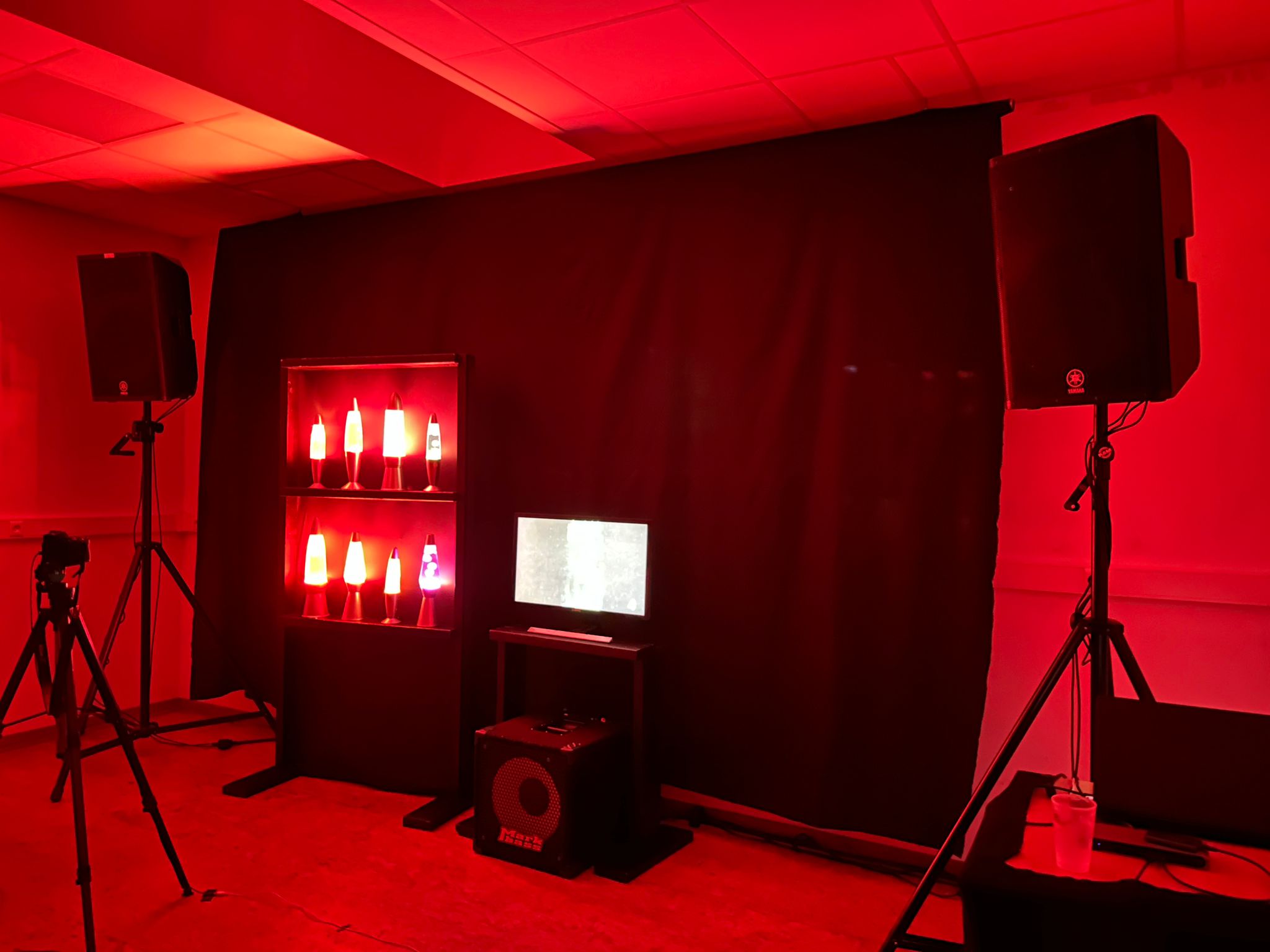
Order By Disorder is the creation of unconventional artist and keyboardist Ties Van de Pol. It utilizes lava lamps to create music according to the principles of chance music, where random movements in the lamps add chaos and unpredictability to the composition. The lamps serve as instruments that influence or alter parts of the music, resulting in instability. Out of the 8 lava lamps, the masses of lava, also referred to as blobs, are tracked. The y-position (or height), surface area, and the number of tracked blobs are used to control parameters in the music. A blob at the top of the lamp thus sends out a high y-value, and vice versa.
Originally, this project is presented as a live installation. This website serves as an online exhibition which also provides more conceptual info. By pressing the 'play' button on the homepage, a different audio version of the installation will start playing.
Lavarand
Lavarand, born in 1996, utilized lava lamps' unpredictable movements to generate random numbers. Developed by pioneers Bob Mende, Landon Curt Noll, and Sanjev Sisidiya, it provided a reliable source of randomness crucial for cryptographic applications. Their method involved capturing images of six lava lamps at fixed intervals and processing the digital output using algorithms to produce highly unpredictable results.
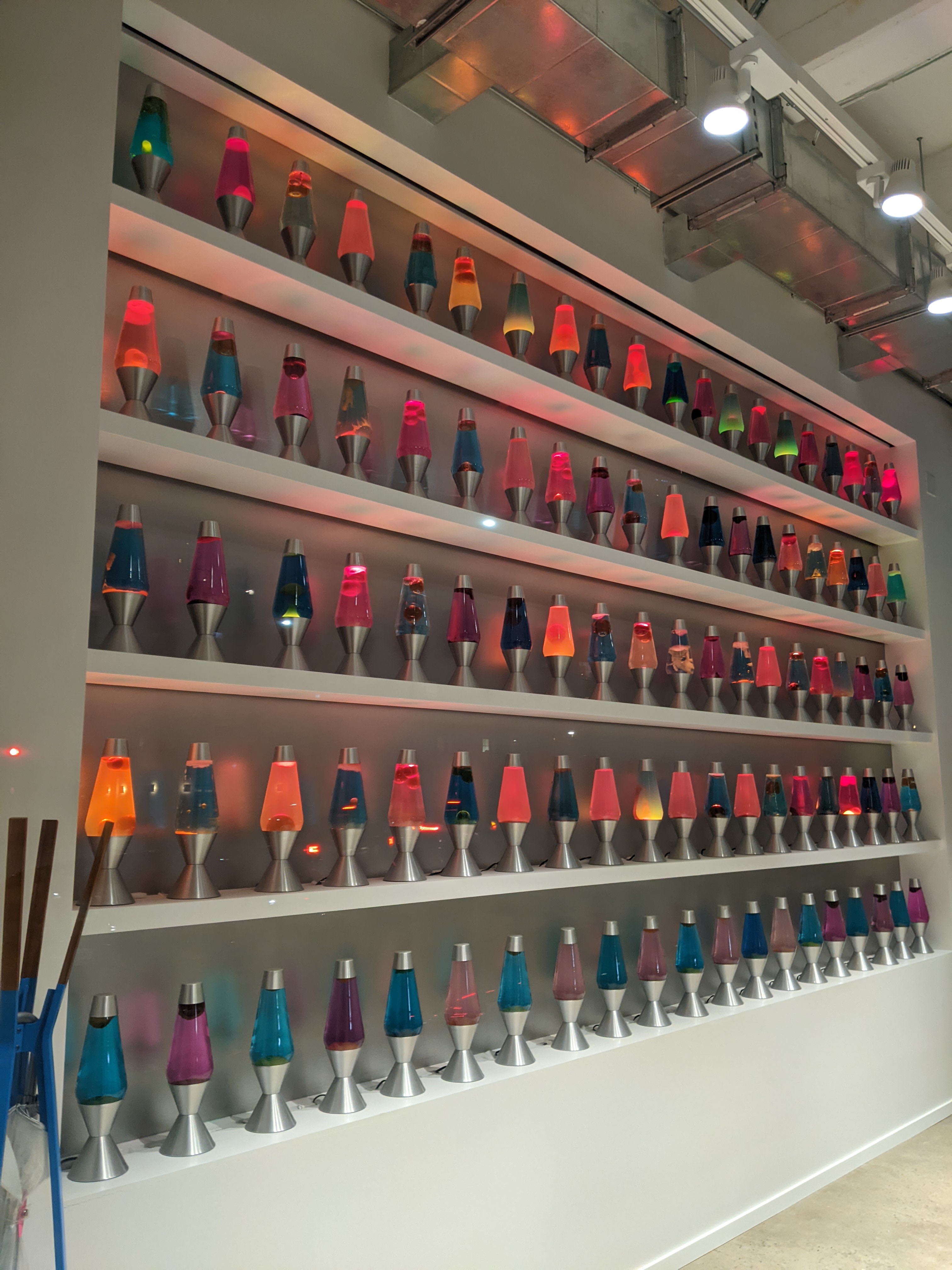
In 2017, Cloudflare embraced Lavarand in their data encryption infrastructure by building 'The Wall of Entropy'. This enhanced version captured real-time images and allowed visitors to contribute 'noise' to the data by standing in front of the camera.
For my project, I drew inspiration from Lavarand's principles but applied them uniquely, focusing on the correlation between visual and auditory elements. I developed a system for real-time image capture, analysis, and coherent data output tailored for music creation. This tool is created to emphasize the correlation between the visual and auditory world.

From Lava Lamp to MIDI
I utilize Max for Live along with the cv.jit extension developed by Jean-Marc Pelletier to capture and track movements in the lamps.
The tracking process begins by capturing video input containing moving objects. This input is then converted into a binary image, isolating only the moving objects or areas as 'blobs'. This transformation involves several filtering steps using M4L's available filters. A blob refers to a coherent group of pixels within an image or video sharing a common property. In the case of binary images, this common property is typically the color white.
From each blob, the x-position, y-position, and area are calculated and outputted. This data is then converted either into MIDI CC data or utilized to generate notes with custom pitch, velocity, and duration settings. All of these processes are facilitated through my own plugin suite, OBD. More information about this suite can be found here.
Live installation & compositions
The main outcome of this research is the physical realization of a live installation, presenting my ideas to an audience by replicating my home setup with minor adjustments. This installation emphasizes synchronicity between visuals and sound. The secondary objective of the installation is to create a serene atmosphere, guiding listeners' focus solely on the visuals and music, encouraging both contemplation and engagement.
The two compositions demonstrate connections to research sources, serving as both starting points and tools for experimentation. Key elements include aleatoric techniques, polymodality, and granular synthesis.